Yoga and Stretching for Stiff Joints After 45
If your joints have grown stiff and achy seemingly overnight in your late forties or fifties, you are not imagining it, and it is not simply “getting old”. Falling oestrogen affects your joints directly — so directly that researchers now describe a “musculoskeletal syndrome of menopause”. Gentle movement, and yoga in particular, is one of the most soothing responses. Here is why the aches happen and how stretching and yoga genuinely help.
Key takeaways
- Oestrogen helps protect joints and cartilage and calm inflammation, so its decline can bring new joint aches and stiffness.
- Joint and muscle symptoms are very common in the transition — most women experience them.
- Yoga and stretching improve flexibility, mobility and circulation, easing stiffness.
- They also calm the nervous system and lower stress, which can turn down pain.
- They complement, but do not replace, strength training for muscle and bone.
Why your joints ache now — the overlooked link
Oestrogen is quietly a joint’s friend: it has anti-inflammatory effects, supports cartilage and the tissues around joints, and helps maintain the muscle that cushions them. As oestrogen falls through menopause, that protection fades, and many women notice new stiffness — often worse in the morning — and aches in the hands, knees, hips, shoulders or back. It is common enough that specialists describe a “musculoskeletal syndrome of menopause”, with more than seven in ten women reporting such symptoms during the transition. Naming it matters: this is a real, hormonal change, not weakness or hypochondria.
How yoga and stretching help
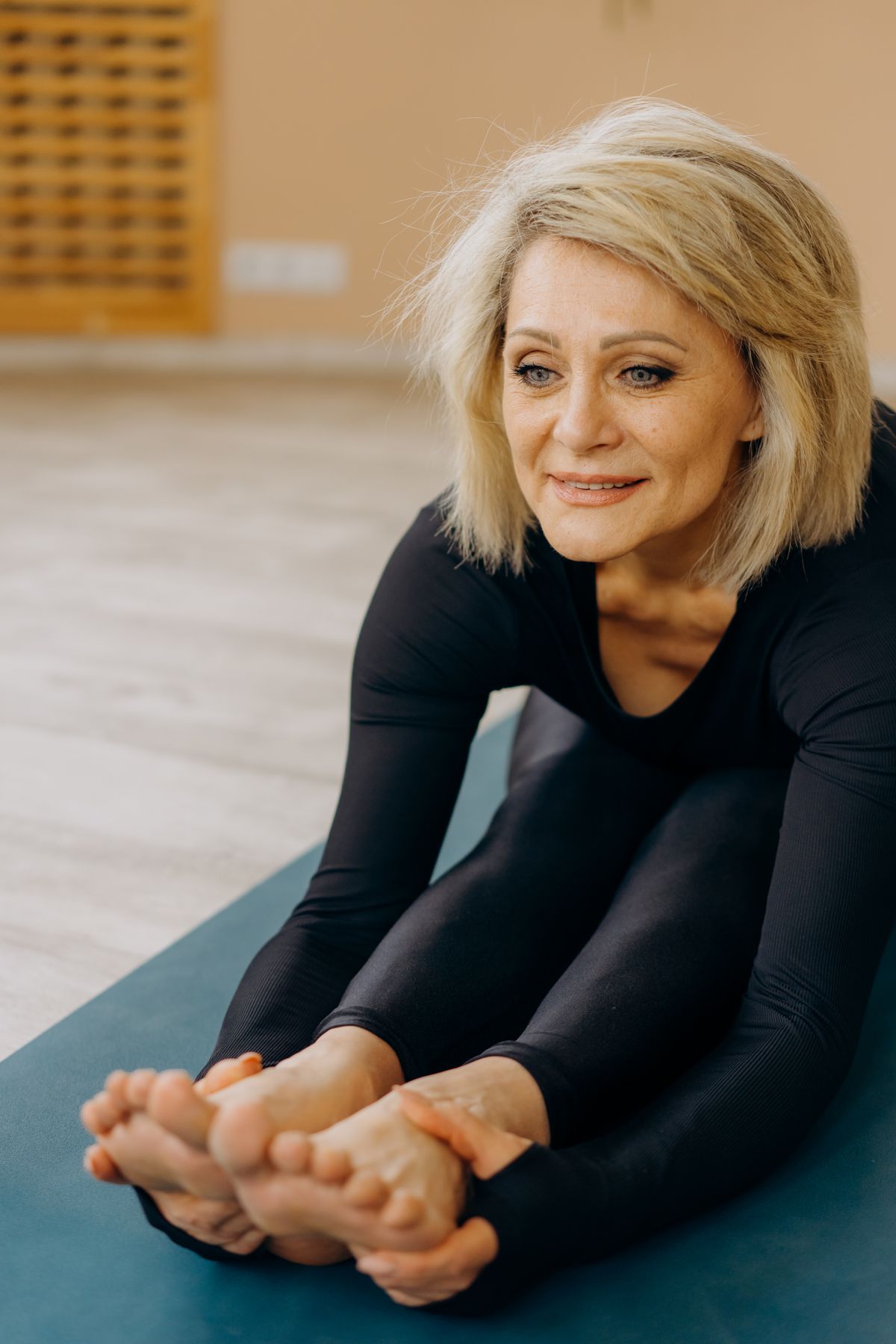
Gentle, regular movement is one of the best responses to stiff, achy joints — and yoga combines several helpful things at once. Stretching and mobility work keep joints moving through their full range, which eases stiffness and improves circulation to the tissues. The slow, breath-led nature of yoga also calms the nervous system and lowers stress hormones, and because stress amplifies pain, that calming effect can genuinely turn the volume down on aches. Many women notice real improvements within a month or two of practising a few times a week.
A gentle approach that works
You do not need to be bendy or buy anything special:
- Aim for 20 to 30 minutes, a few times a week — little and often beats the occasional long session.
- Favour gentle, joint-friendly movements: slow flows, cat-cow, gentle twists, hip openers and shoulder rolls.
- Move within a comfortable range; a stretch should feel like a gentle pull, never sharp pain.
- Warm up first — even stiff joints move more easily once the body is warm.
- Add everyday mobility, like standing and moving each hour if you sit a lot.
The honest limits
Yoga and stretching are wonderful for mobility, stiffness and stress, but be clear on what they do and do not do. They keep you supple and calm, and support balance and gentle strength — but they do not replace proper strength training for building muscle and protecting bone, which needs greater resistance. And they are not a treatment for arthritis or an injury. Think of yoga as a soothing, restorative partner to strength work, not a substitute for it.
When to see a professional
See a professional if joint pain is severe, persistent, one-sided, or comes with swelling, redness or heat, or if a joint gives way or locks — these deserve proper assessment rather than being written off as “just menopause”. A physiotherapist can also tailor movements if you have an existing joint problem.
The studies behind this
The instinct to rest a stiff joint is the one the evidence most firmly overturns. Geneen and colleagues’ overview of Cochrane reviews (2017) — 264 studies, nearly 20,000 adults with chronic pain including osteoarthritis — found exercise and movement-based programmes consistently reduced pain and improved function and quality of life, with remarkably few harms beyond temporary soreness. No single style owned the benefit: what mattered was moving regularly, gently and progressively — which is precisely the job yoga and structured stretching do for a stiff midlife body, and why “motion is lotion” survives as physiotherapy’s favourite cliché.
The consistency trick that beats the perfect class: pick three poses you can do next to the kettle (cat-cow, a doorway chest opener, a supported hip hinge) and attach them to the morning boil. Ninety seconds, every day, beats forty-five minutes on the Sundays you feel like it — stiffness responds to frequency more than heroics.
Frequently asked questions
Why do my joints ache during menopause?
Falling oestrogen removes some of its natural protection for cartilage and joint tissues, along with its anti-inflammatory effect, leaving many women with new stiffness and aches. It is a recognised part of the transition, not just ageing.
Can yoga help menopause joint pain?
Yes — it improves flexibility, mobility and circulation to ease stiffness, and its calming effect lowers stress that can amplify pain. Many women feel better within a month or two of regular practice.
How often should I do yoga for stiff joints?
Around 20 to 30 minutes a few times a week works well; little and often is better than rare long sessions. Consistency is what brings the mobility and calming benefits.
Is stretching enough exercise on its own?
No. Stretching and yoga are excellent for mobility and stress, but they do not replace strength training for muscle and bone. Combine both for the full benefit.
What type of yoga is best for menopause?
Gentle, slower styles that emphasise mobility and breathing suit stiff, achy joints best. The best style is one you enjoy and will keep doing, at a comfortable level.
When should I worry about joint pain?
See a professional if pain is severe, persistent, one-sided, or comes with swelling, redness, heat, locking or giving way. These signs warrant assessment rather than being assumed to be menopausal.
Products we think are worth a look
Fit and Healthy Being is reader-supported. Some links below are affiliate links: if you buy through them we may earn a small commission at no extra cost to you. This is education, not medical advice. See our affiliate disclosure.
Mobility Reset Method is a physical-therapy-based, at-home programme for adults over 50 — gentle daily movement aimed at easing stiff, achy joints, with no medications or equipment.
Get your free Healthy Ageing Starter Kit
A 21-day meal plan, hormone checklist, walking planner and more — free when you join our newsletter.
References and disclaimer
Sources: This article draws on peer-reviewed research on the musculoskeletal effects of menopause and on yoga and stretching for mobility and stress, alongside guidance from major menopause bodies. For further evidence-based guidance, see World Health Organization and Cochrane. It is general information, not medical advice.
This article reflects current, widely accepted physical-activity guidance from major health organisations. It is for general education only and is not a substitute for personalised medical advice. If you have joint pain or a health condition, please speak with a qualified professional before starting.