Best Home Exercise Equipment for Women Over 45
You do not need a gym or a fortune to get strong at home — and after 45, strength is the single most valuable thing you can build for your metabolism, bones and balance. But the fitness market is full of gadgets you will use twice. This guide ranks the home exercise equipment that is genuinely worth it for women over 45, based on what actually builds and protects muscle, bone and balance.
Some links below are affiliate links: if you buy through them we may earn a small commission at no extra cost to you. As an Amazon Associate I earn from qualifying purchases. It never influences our rankings. This is general information, not medical or fitness advice — if you are new to exercise or have a health condition or injury, check with a professional or qualified trainer first.
The short version
- If you buy just one thing, make it a set of resistance bands — cheap, versatile and kind to the joints.
- The evidence shows bands can be as effective as machines for building strength in older adults.
- Add an exercise mat for floor, core and mobility work.
- If you have the budget and space, dumbbells are a great next step.
- A sturdy chair you already own is one of the best free tools there is.

Home equipment compared
| Equipment | Best for | Cost & space | Our take |
|---|---|---|---|
| Resistance bands | Versatile strength, travel, joints | Low cost, tiny space | The best-value starting point |
| Adjustable dumbbells | Progressive strength | Higher cost, some space | Worth it if you will stick with it |
| Light dumbbell pair | Beginners on a budget | Low-to-moderate cost | A simple, cheap way in |
| Exercise mat | Floor, core & mobility | Low cost | A comfortable, near-essential base |
| Sturdy chair or step | Sit-to-stands, step-ups, balance | Free (household) | Underrated and free |
1. Resistance bands — the best-value pick
Bands look almost too simple to work, but research in older adults shows they can build strength and muscle as effectively as machines or free weights. They are inexpensive, take up no space, travel easily and are gentle on the joints — ideal if you are starting out or returning after a break. Best for: almost everyone, especially beginners and anyone with achy joints. Who should skip them: very few — though if you are already lifting heavy, you may want more load. A set with a range of strengths is most useful. See our resistance bands at home guide.
2. Adjustable dumbbells — for progressive strength
Adjustable dumbbells let you increase the weight as you get stronger, which is exactly the “progressive overload” that keeps muscles adapting. Best for: those ready to invest and commit to regular strength work. Who should skip them: beginners unsure they will stick with it, or anyone short on space or budget — bands do a lot first. Learn the moves in our strength training guide.
3. A light dumbbell pair — the cheap way in
A single pair of light-to-moderate dumbbells is an inexpensive way to start adding load to squats, presses and rows. Best for: beginners who prefer weights to bands. Who should skip them: if you will quickly outgrow one fixed weight, adjustable dumbbells may be better value over time.
4. An exercise mat — the quiet essential
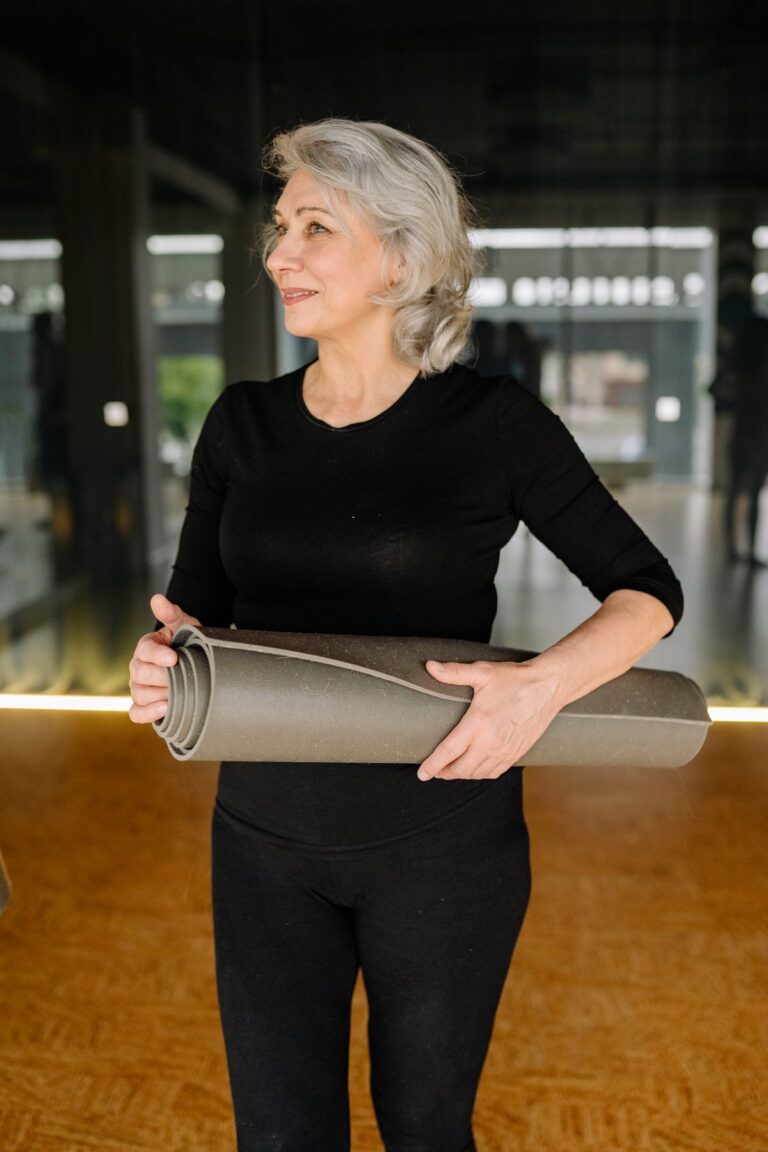
A decent mat makes floor work, core exercises, stretching and gentle yoga comfortable — which means you are more likely to do them. Best for: everyone with a hard floor. Who should skip it: only if you already have a soft, non-slip surface to work on.
5. A sturdy chair — the best free tool
Do not overlook what you already own. A stable chair is perfect for sit-to-stands (superb for leg strength), step-ups, incline press-ups and balance practice holding the back for support. Best for: beginners, and anyone building balance and leg strength safely. Pair it with our balance and fall-prevention guide.
A foam roller — for easing tight, stiff muscles
Once you are moving and lifting a little, a foam roller is a low-cost way to loosen tight calves, hips and shoulders, and to warm up before a session. The evidence is modest, and it will not lengthen muscle or remove pain, but many women find that a few minutes of gentle rolling makes stiff mornings and next-day soreness more comfortable. A firm, textured roller lasts for years, needs no power and stores in a cupboard.
What you can happily skip
Vibrating belts, “toning” gadgets, and most single-purpose machines are rarely worth the money or the space. So are pricey trackers if the numbers just make you anxious. Strength, movement and consistency build results — not gadgets. Spend on the few versatile basics above and put the rest toward good trainers.
Frequently asked questions
What home exercise equipment is best for women over 45?
A set of resistance bands is the best-value starting point — versatile, joint-friendly and, the evidence shows, as effective as machines for building strength. Add a mat, and dumbbells if you have the budget and space.
Are resistance bands as good as weights?
For building strength and muscle in older adults, studies suggest they can be just as effective, as long as you use enough resistance and progress over time. They are also cheaper and kinder to the joints.
Do I need a gym to get strong after 45?
No. Bodyweight moves, resistance bands and a few household items are enough to build real strength at home. The best equipment is whatever you will actually use consistently.
What should a complete beginner buy first?
A set of resistance bands and, if your floor is hard, an exercise mat. Add a sturdy chair from your own home for sit-to-stands, and you have a complete beginner setup for very little.
How much should I spend?
Very little to start — bands and a mat cost a modest amount, and a chair is free. Only invest in adjustable dumbbells once you know you will keep training regularly.
Is home strength training safe if I have joint problems?
Often, yes, and bands are especially joint-friendly — but if you have an injury, osteoporosis or a health condition, get tailored guidance from a professional or physiotherapist first so movements are adapted to you.
Keep reading
References and disclaimer
This guide is general information, not medical or fitness advice. If you are new to exercise, returning after a break, or managing an injury or health condition, check with a professional or qualified trainer before starting.
Sources: This guide draws on peer-reviewed research on resistance training and resistance-band exercise in older adults, alongside general exercise guidance. For further evidence-based guidance, see World Health Organization and Cochrane.