Strength Training After 45: The Simple Case for Lifting and Walking
If you could do only one form of exercise after 45, it should be strength training. Not for a “toned” look or to chase your younger self, but because lifting is uniquely powerful at protecting the muscle, bones and metabolism that midlife hormones quietly erode. Here is why it matters so much now, and how to start without a gym or any fear of “bulking up”.
Key takeaways
- Strength training is the single most valuable exercise after 45 — it protects muscle, bone and metabolism at once.
- Falling oestrogen speeds up muscle and bone loss; lifting is the most direct way to push back.
- You will not “bulk up” — women build strength and shape, not bulk, without extreme training.
- Two to three sessions a week is enough to see real benefits.
- Bodyweight, bands or weights all work — the key is challenging your muscles and gradually doing a little more.
Why strength training matters most now
From your forties, you lose muscle and bone steadily, and oestrogen’s decline accelerates both. Strength training pushes back more directly than any other exercise: working your muscles against resistance tells your body to keep and build them, and the pull of muscle on bone stimulates the cells that keep bone dense. The payoff is broad — a faster metabolism, steadier blood sugar, stronger bones, better balance, and often improved mood and sleep. Some studies even suggest it can ease certain menopausal symptoms.
You will not “bulk up”
This fear stops many women lifting, and it is unfounded. Building large muscles takes years of dedicated training, specific eating, and the higher testosterone levels most women simply do not have. What strength training actually gives women is definition, strength and a body that works well — not bulk. The far bigger risk at this age is doing too little, not too much.
How to start
- Focus on the big movements that work several muscles at once: squats or sit-to-stands, hinges, pushes, pulls and carries.
- Train two to three times a week, leaving a day between sessions for muscles to recover and rebuild.
- Use a resistance that feels challenging by the last couple of repetitions — that is the signal that prompts change.
- Progress gradually: a little more weight, another repetition, or a harder variation over time. This “progressive overload” is what keeps you improving.
- Prioritise good form over heavy loads, especially at first; a few sessions with a trainer or a good programme is a worthwhile investment.
No gym required
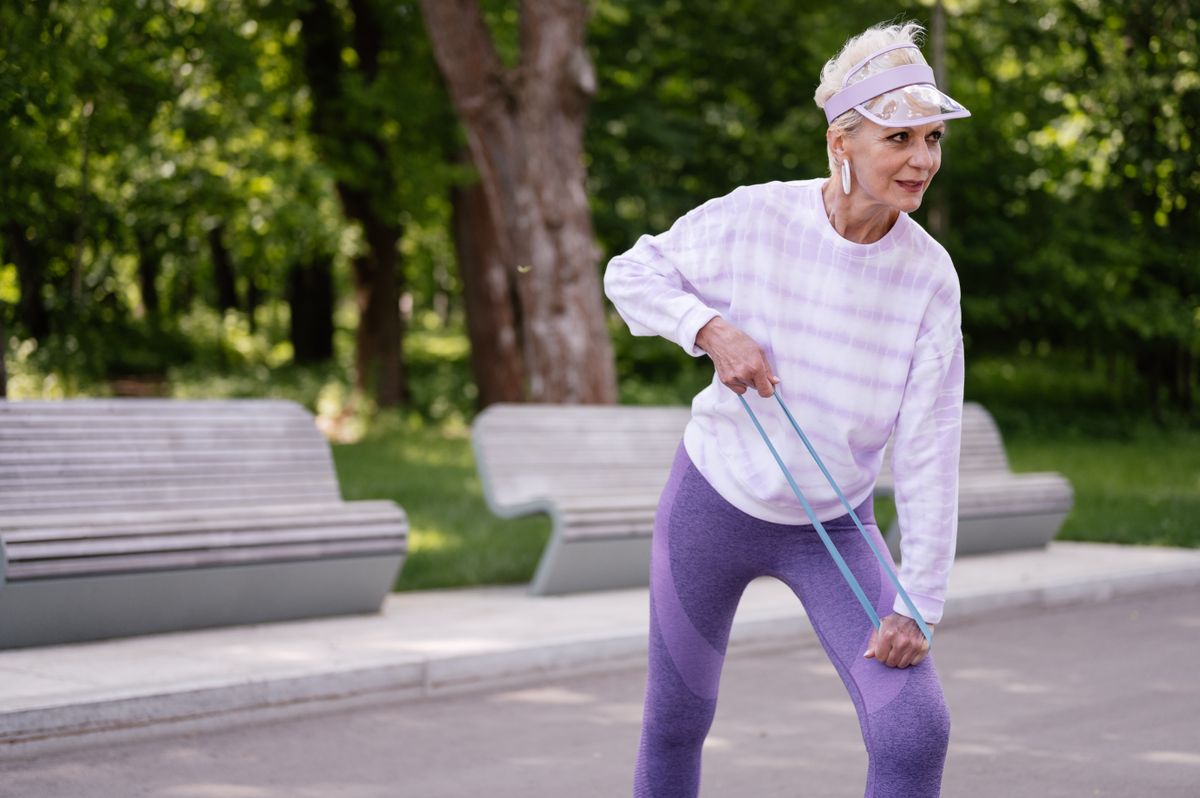
You do not need a gym. Bodyweight exercises, resistance bands and a couple of dumbbells at home are enough to build real strength — the evidence shows bands can be as effective as machines for older adults. The best equipment is whatever you will actually use consistently.
Pairing it with the rest
Strength training is the foundation, but it works best alongside daily walking for heart health and mood, and some balance work to protect against falls. Think of lifting as the non-negotiable core, with walking and balance rounding it out.
When to see a professional
If you are new to exercise, have a health condition, injury or osteoporosis, or are unsure where to start, check with a professional or a qualified trainer first. They can tailor movements to you — strength training can be adapted safely for almost everyone.
The studies behind this
Two references carry this article. Westcott’s review, bluntly titled “Resistance training is medicine” (2012, Current Sports Medicine Reports), collects the numbers: untrained adults lose muscle every decade from mid-life, and modest resistance work rebuilds it while improving resting metabolism, insulin sensitivity, blood pressure and bone. And for women specifically told to “take it easy” on their bones, the LIFTMOR trial (2018) showed supervised, progressively heavy lifting improved bone density in postmenopausal women with osteopenia — twice a week, thirty minutes, eight months. The dose that keeps appearing across this literature is the one we recommend: two sessions a week, working the whole body, always progressing.
Your first month needs exactly five movements: sit-to-stand, incline push-up (kitchen bench height), band row, band overhead press, and a carry. Two rounds of 8–12, twice a week, adding a rep or a band colour whenever it feels easy. Boring on paper — and the difference in how the stairs and shopping bags feel at week six is what converts every sceptic we hear from.
Frequently asked questions
Is strength training safe after menopause?
Yes, and it is one of the best things you can do — for muscle, bone and metabolism. If you have osteoporosis, an injury or a health condition, get tailored guidance first, but it can be adapted safely for almost everyone.
Will lifting weights make me bulky?
No. Building large muscles requires years of specific training and hormones most women do not have. Strength training gives women definition and strength, not bulk.
How often should I strength train?
Two to three sessions a week, with a rest day between, is enough to see real benefits in strength, bone and body composition.
Can I build strength without a gym?
Absolutely. Bodyweight moves, resistance bands and a few dumbbells at home work well — the evidence shows bands can be as effective as machines for older adults.
Does strength training help bones?
Yes. The pull of working muscles on bone, plus weight-bearing load, stimulates the cells that keep bone dense — a key defence against the bone loss of menopause.
I have never lifted — where do I start?
Begin with the big, everyday movements like sit-to-stands and gentle pushes and pulls, using bodyweight or light resistance, and progress slowly. A few sessions with a trainer or a good beginner programme makes it much easier.
Products we think are worth a look
Fit and Healthy Being is reader-supported. Some links below are affiliate links: if you buy through them we may earn a small commission at no extra cost to you. This is education, not medical advice. See our affiliate disclosure.
Mobility Reset Method is a physical-therapy-based, at-home programme for adults over 50 — gentle daily movement aimed at easing stiff, achy joints, with no medications or equipment.
Get your free Healthy Ageing Starter Kit
A 21-day meal plan, hormone checklist, walking planner and more — free when you join our newsletter.
Read next: Best Home Exercise Equipment for Women Over 45.
References and disclaimer
Sources: This article draws on peer-reviewed research on resistance training, muscle and bone health in postmenopausal women, alongside exercise guidance. For further evidence-based guidance, see World Health Organization and Cochrane. It is general information, not medical advice.
This article reflects current, widely accepted physical-activity guidance from major health organisations. It is for general education only and is not a substitute for personalised medical advice. If you have an injury or health condition, please speak with a qualified professional before starting a new exercise programme.